
Understanding Keratoconus: Causes, Symptoms, Treatment & Prevention | Best Cornea Specialist in India
Introduction
Keratoconus is a progressive eye condition that can severely affect your vision if not diagnosed and treated early. With modern diagnostic tools and advanced treatments, vision loss due to keratoconus can be effectively prevented. Dr. Vikas Veerwal, a senior cornea and refractive surgeon in IndirapuramGhaziabad, Noida, Greater Noida and Delhi-NCR, provides cutting-edge care for keratoconus using a patient-centered approach.
Having trained from best institutes in the country (MAMC, Delhi and LV Prasad Eye Institute Hyderabad), Dr Veerwal has successfully treated more than 1000 patients with keratoconusover the last 13 years. He is a well renowned name in Cornea and refractive surgery in India. Dr Veerwal believes in providing the most ethical and honest care to all his patients. He is known for his attention to detail, personalised treatment and clinical expertise. He is truly Dedicated to You and Your Eyes.
1. What is the Cornea?
The cornea is the clear, dome-shaped front surface of the eye that focuses light onto the retina. It plays a crucial role in sharp vision. It is the first surface of your eye where light hits and thus acts like a lens to focus the light on the retina. Any irregularities or scarring in cornea can lead to decrease in vision.
If you’re looking for: what is the cornea, cornea function in eye – we are here to guide you.
2. How Does Keratoconus Happen?
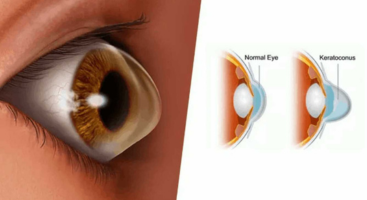
Keratoconus is a condition where the cornea thins out and bulges into a cone-like shape, leading to distorted vision. The exact cause is not fully understood, but it is linked to genetic, environmental, and mechanical factors like excessive eye rubbing. Think how the strength of a wall comes from its bricks- if the bricks are hollow, the wall is going to be weak. Similarly, major strength of your cornea comes from collagen fibres- if collagen fibres are abnormal or reduced in number, the cornea is weaker and this leads to slow bulging and thinning of cornea. When cornea starts bulging, its shape starts becoming irregular leading to frequent change of glasses and increase in cylindrical power. With time, even with glasses, patient of keratoconus is unable to see clearly.
If you’re looking for: what causes keratoconus, keratoconus risk factors – we help you understand your disease better.
3. How Can I Know If I Have Keratoconus?
Symptoms include:
- • Blurred or distorted vision
- • Frequent changes in glasses prescription
- • Vision not improving to 6/6 or 20/20 even with glasses
- • Visible shadow around letters, reduced sharpness of vision
- • Increased sensitivity to light
- • Seeing halos or ghost images
A corneal topography or Pentacam scan confirms the diagnosis.Pentacam scan gives a detailed image of your cornea, highlighting all the irregularities, confirming the diagnosis.
If you’re looking for: symptoms of keratoconus, how to detect keratoconus- we have the latest technology to detect keratoconus at an early stage.
4. Can I Get Keratoconus Without Family History?
Yes, many patients with keratoconus have no known family history. Environmental triggers like eye rubbing, allergies, and oxidative stress may play a role.
If you’re looking for: keratoconus without family history – we help you understand the disease better.
5. Will I Get Keratoconus If One Of My Parent Has It?
Not necessarily, but you are at a higher risk. Regular screening is recommended if a close relative has keratoconus.
If you’re looking for: keratoconus genetics, hereditary eye diseases – we can guide you for the need for regular check-ups to ease your mind.
6. When Should I Suspect Keratoconus?
If you have high astigmatism, blurred vision despite glasses, or frequent prescription changes, you should get a corneal scan. Early detection using Pentacam or topography is critical.
If you’re looking for: early signs of keratoconus, keratoconus screening – we have helped hundreds of patients with keratoconus to prevent complications of the disease by stopping it at an early stage.
7. How to Prevent Keratoconus from Progressing?
- • Avoid rubbing your eyes
- • Treat allergies
- • Use lubricating eye drops
- • Regularly monitor with corneal scans
If you’re looking for: how to stop keratoconus, prevent keratoconus progression- book an appointment with our keratoconus expert- Dr Veerwal today!
8. Detected with Keratoconus? Your Treatment Options:
- • Corneal Cross-Linking (CXL).
- • Customized Contact Lenses (RGP, Scleral, Hybrid).
- • ICRS (Intacs Rings).
- • Topography-guided PRK.
- • ICL/Toric ICL.
- • Corneal Transplant (for advanced cases).
If you’re looking for: keratoconus treatment, cross-linking for keratoconus, best treatment for keratoconus – we have years of experience in treating keratoconus at every stage to provide you with the best outcome.
9. How Often Should I Get My Eye Checked for Keratoconus?
Every 6–12 months, or sooner if symptoms worsen. A Pentacam scan should be done at each visit to monitor progression.
If you’re looking for: keratoconus follow-up, keratoconus monitoring frequency- we can help you with consistent support.
10. Can Keratoconus Worsen During Pregnancy?
Yes, hormonal changes during pregnancy can accelerate keratoconus. Frequent monitoring is advised. Multiple cases of keratoconus that have progresses during pregnancy have been reported.
If you’re looking for: keratoconus in pregnancy, does pregnancy affect keratoconus- we have the right expertise to help you.
11. I Have a High Cylindrical Number – Could It Be Keratoconus?
High or progressive cylindrical power could be an early sign of keratoconus. A corneal scan can confirm it.
If you’re looking for: high astigmatism keratoconus, cylindrical power eye disease- if you are unsure that you have keratoconus or not, book a consultation with us today.
12. What is the best treatment for Keratoconus?
Corneal collagen cross-linking (CXL or C3R) is the only treatment to stop keratoconus from increasing. But it does not improve vision, therefore, we combine it with other procedures to improve the vision of our patients. A newer treatment called CAIRS has also shown promise like INTACS in improving vision of patients with keratoconus. Not all patients are suitable for every treatment and management varies depending on stage of the disease.
If you’re looking for: keratoconus treatment cost India, CXL vs transplant, best contact lenses for keratoconus- Dr Veerwal has been a trusted expert in treating keratoconus. He customizes treatment for every patient to get you to the best possible outcome.
13. Why Choose Dr. Vikas Veerwal for Keratoconus Care?
- • Advanced Pentacam& topography-based diagnosis.
- • Individualized treatment plans.
- • In-house availability of CXL, ICRS, scleral lenses.
- • A surgeon with experience of more than 750 transplants.
- • Specialised in treating keratoconus with an experience of treating more than 1000 patients with this disease.
- • Trusted by 20,000+ patients across Delhi-NCR.
Book your comprehensive keratoconus evaluation with Dr. Vikas Veerwal today.
Why Patients Choose Our Clinic for Keratoconus Treatment
- • Specialized care for progressive keratoconus.
- • Timely intervention using CXL and advanced lenses.
- • Transparent pricing and patient education.
- • Regular monitoring for long-term outcomes.
- • Convenient location forIndirapuram Ghaziabad, Noida, Greater Noida and Delhi NCR residents.
FAQs on Keratoconus
1. Can Keratoconus Be Cured Permanently?
Keratoconus cannot be reversed completely, but progression can be halted with
corneal cross-linking and vision improved with lenses or surgery using INTACS or
ICL.
2. Is Corneal Collagen Cross-Linking (CXL/C3R) Safe?
Yes, CXL is a globally accepted safe procedure with high success in stabilizing
keratoconus when done early.
3. Can Keratoconus Cause Blindness?
Keratoconus rarely causes total blindness but can cause significant vision loss
if untreated. Timely diagnosis prevents severe complications.
4. Are Contact Lenses Safe for Keratoconus?
Yes. Scleral, RGP, and hybrid lenses are safe and effective in improving vision.
Fitting should be done by a keratoconus specialist.
5. Can LASIK Be Done If I Have Keratoconus?
No. LASIK is contraindicated in keratoconus as it thins the cornea further.
Topography-guided PRK may be an option in early stable cases.
6. Can Keratoconus Come Back After Cross-Linking?
If done at the right time, CXL usually halts progression permanently. Rarely,
very young patients may need repeat treatments. Yearly check-ups are still
recommended even if you have undergone CXL for keratoconus.
7. Is Keratoconus Genetic?
Yes, keratoconus has a genetic component. First-degree relatives should get
regular corneal scans.
8. Can Eye Rubbing Make Keratoconus Worse?
Absolutely. Eye rubbing is a major factor in worsening keratoconus. It should be
strictly avoided.
9. What is the Difference Between CXL and Corneal
Transplant for keratoconus?
- • CXL strengthens the cornea to prevent progression.
- • Corneal transplant replaces the cornea in advanced scarring stages when CXL in not possible.
Protect Your Vision – Early Detection Saves Sight!
Schedule Your Appointment Today with Dr. Vikas Veerwal – The Most Trusted Keratoconus Specialist in Delhi-NCR.We are committed to restoring your vision with safety, care, and compassion.Dr Veerwal is one of the best cornea and refractive surgeons in Delhi-NCR, Noida, Indirapuram, Ghaziabad, Greater Noida and Noida extension region. Trust your eyes to a specialist who combines clinical excellence with genuine care. Book your consultation with Dr Veerwal today!!!
