
🧠 How We Calculate Lens Power in Cataract Surgery – A Complete Guide for Patients
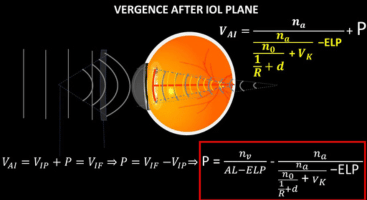
How Is Lens Power Calculated in Cataract Surgery? | IOL Power Calculation Explained
Learn how lens power is calculated before cataract surgery. Understand biometry, formulas, and why precision matters. Book your surgery with India’s best cataract surgeon today.
Introduction
One of the most important steps in cataract surgery is choosing the right intraocular lens (IOL) power to implant in place of your natural cloudy lens. But have you ever wondered: How exactly do eye surgeons calculate the lens power?
Accurate IOL power calculation ensures that after cataract surgery, your vision is as clear and sharp as possible — possibly even without glasses!
In this blog, we explain how lens power is calculated, what tools and formulas are used, and why this step is absolutely critical for the success of your cataract surgery.
🔬 What Is Intraocular Lens (IOL) Power?
After removing the cataract (cloudy natural lens), your eye surgeon places an artificial lens inside the eye. This is called an Intraocular Lens (IOL). The power of the IOL determines how well you’ll be able to see after surgery. The goal is to focus light perfectly on the retina, just like a healthy natural lens.📏 How Is IOL Power Calculated?
The process is done through a comprehensive pre-surgical test called biometry.
✅ Key Measurements Involved:
- 1. Axial Length – The length of the eye from the front (cornea) to the retina
- 2. Corneal Curvature (K-values) – Measures how steep or flat your cornea is
- 3. Anterior Chamber Depth – Space between the cornea and lens
- 4. Lens Thickness – Used in advanced formulas
- 5. White-to-White (WTW) – Horizontal width of the visible cornea
These values are fed into specific mathematical formulas to calculate the ideal lens power for your eye.
📡 Types of Biometry Methods
🔹 1. Optical Biometry (Highly Accurate)
- • Uses laser interferometry (e.g., IOLMaster, Lenstar)
- • Non-contact and highly precise
- • Ideal for most patients
🔹 2. Ultrasound Biometry (For Dense Cataracts)
• Uses sound waves to measure axial length • Preferred when the cataract is very dense and optical methods don’t work📐 Popular IOL Power Calculation Formulas
Depending on the eye's anatomy, surgeons use advanced formulas:
- • SRK-T – For average eyes.
- • Barrett Universal II – One of the most accurate, used for all eyes.
- • Holladay II – Considers multiple variables.
- • Haigis – Best for eyes that have had LASIK or other refractive surgeries.
- • Hill-RBF & Kane formula – AI-based, very precise.
Surgeons may use more than one formula to cross-check results, especially in complex cases.
👓 What Happens After Calculation?
Once the power is calculated, your surgeon will help you choose the type of IOL based on your lifestyle, visual needs, and expectations:
- • Monofocal lenses – Clear vision at one distance.
- • Multifocal lenses – See far and near, reduce need for glasses.
- • EDOF (Extended Depth of Focus) lenses – Wider range of focus.
- • Toric lenses – Correct astigmatism.
🤔 Most Commonly Asked Questions (FAQs)
❓ Can I choose to be without glasses after cataract
surgery?
Yes, with the right lens (like multifocal or EDOF), many patients can become
glasses-free. Your eye power, expectations, and eye condition will help
determine the best choice.
❓ What if I had LASIK or RK surgery before?
Special formulas and techniques are used to calculate IOL power in
post-refractive surgery eyes. Accurate results are possible with experienced
surgeons.
❓Is biometry painful?
Not at all. Optical biometry is completely non-contact and painless, taking just
a few minutes.
❓Can lens power change after surgery?
Once implanted, the lens power does not change. However, if there’s a
significant mismatch (rare), a secondary correction or lens exchange might be
needed.
❓ What if the power calculation is wrong?
That’s why experience, precision technology, and expertise matter. Choosing a
skilled surgeon with advanced machines reduces error to near zero.
🏥 Why Choose Dr Vikas Veerwal for Cataract Surgery?
India’s Trusted Centre for Advanced Cataract
Solutions
We are proud to be one of India’s leading eye hospitals offering precision
cataract surgery using the most advanced diagnostic tools and AI-powered IOL
calculation platforms.
🌟 Our Edge:
- ✅ Cataract surgery by India’s top cataract and IOL planning expert.
- ✅ Use of Barrett Universal II, Hill-RBF, and Kane AI formulas.
- ✅ Lenstar, IOLMaster, and Pentacam for accurate measurements.
- ✅ Full range of premium IOLs including Alcon, Zeiss, Tecnis, and more.
- ✅ Custom planning for post-LASIK or complex eye anatomy.
- ✅ Thousands of successful surgeries with happy patients across India.
📍 Based in Delhi-NCR, we serve patients across India and abroad
📞 Schedule your appointment: 9811036639
🌐 Visit: drvikasveerwal.com
📌 Final Words
Choosing the right lens power is the foundation of successful cataract surgery. It’s not just a number—it's your ticket to clear vision. With modern biometry, smart formulas, and expert surgical hands, you can be confident of the best visual outcomes.
Dr Vikas Veerwal has trained fromMaulana Azad Medical College (MAMC, Delhi- Ranked amongst top 5 colleges in India) and LV Prasad Eye Institute (Ranked Number 7 eye institute in the world). He holds the degrees of MBBS, MS, DNB, FLVPEI, FICO (UK), FAICO (Refractive Surgery)- making him a superspecialist in this field.With experience of more than10000 successful cataract surgeries, Dr Veerwal is considered one of the best cataract surgeonsin Delhi-NCR, Noida, Greater Noida, Ghaziabad and Indirapuram area. Book an appointment today for an honest, transparent, personalised advice from the best in the country.
