
Femto-Laser Assisted Cataract Surgery (FLACS): A Complete Guide by Dr. Vikas Veerwal | Best Cataract Surgeon in India
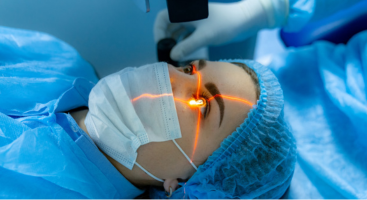
Cataracts are among the most common causes of vision loss, especially in older adults. Thankfully, modern advancements in cataract treatment have made surgery safer, quicker, and more effective. One of the most innovative and sought-after technologies is Femto-Laser Assisted Cataract Surgery (FLACS), often referred to as robotic or laser cataract surgery
In this blog, Dr. Vikas Veerwal, a senior eye surgeon with vast experience in advanced cataract techniques, answers the most important patient queries on FLACS.
1. How is cataract surgery done?
In cataract surgery, the cloudy lens of the eye is removed and replaced with a clear intraocular lens (IOL). Traditionally, this is done using phacoemulsification (Phaco) or microincision cataract surgery (MICS) using ultrasonic energy. The newer FLACS method uses a femtosecond laser for key steps in the surgery.
2. What is the difference between routine cataract surgery and femto-laser or robotic cataract surgery?
Routine cataract surgery uses manual blades and ultrasound for lens removal. In Femto-Laser Cataract Surgery, a precise femtosecond laser performs:
- • Corneal incisions - surgery becomes bladeless.
- • Anterior capsulotomy - creating a perfect opening in the natural lens.
- • Lens fragmentation - softening the lens and making the surgery easier.
This leads to better precision, safety, and outcomes. Hence, FLACS is sometimes called robotic cataract surgery.
3. How is FLACS better than MICS or Phacoemulsification surgery?
- • Blade-free and highly precise
- • Customized incisions and lens positioning
- • Less ultrasound energy needed
- • Lower risk of complications
- • Improved outcomes with premium IOLs
4. Why should you choose FLACS over MICS for your eyes?
Patients choosing FLACS often report:
- • Better vision quality
- • Quicker recovery
- • Less post-op discomfort
- • Higher satisfaction with multifocal/trifocal lenses
5. Will my recovery be faster with FLACS versus routine cataract surgery?
Yes. Due to reduced trauma and increased precision, most patients recover faster with femto-laser surgery, with quicker return to normal activities.
6. What are the risks associated with FLACS vs routine cataract surgery?
Risks are minimal in both methods. However, FLACS:
- • Reduces human error
- • Offers better wound sealing
- • Achieves better centration of premium lenses
7. Is femto-laser cataract surgery safer than routine cataract surgery?
Yes, especially for patients with dense cataracts or complex cases. The laser reduces complications by enhancing surgical precision and reducing energy usage.
8. How long does laser cataract surgery take?
The procedure takes around 10–15 minutes, similar to traditional methods, but the laser portion adds just a few extra minutes with significantly higher precision.
9. After how long can I wash my hair and face after laser cataract surgery?
You can wash the lower half of your face gently from the next day, avoiding soap or water from entering the eyes. Hair wash is safe after 5-7 days, depending on healing and after consulting with your operating surgeon.
10. What are different machines available for femto-laser cataract surgery and which one is best?
Popular FLACS platforms include:
- • LenSx (Alcon)
- • Z8 by Zeimer
- • Catalys (J&J)
- • Victus (Bausch + Lomb)
Z8 by Zeimer and Catalys Precision Laser System is widely considered top-tier for its 3D imaging, speed, and precision.
11. How Dr. Vikas Veerwal ensures the best outcomes with FLACS
Dr.Veerwal is a pioneer in advanced cataract surgery, offering:
- • Personalized eye evaluations.
- • Advanced technology for right IOL power calculations.
- • Years of experience with more than 10000 successful cataract surgeries performed.
- • Near Zero Complication Rate.
- • Expertise with Zeimer and Catalys FLACS system.
- • Careful IOL selection understanding the needs of the patients.
- • Top-notch post-op care.
- • Patient-first counselling, ethical and transparent care.
Dr Veerwal believes in treating every patient like his own family member. This personal touch has made him one of the most trusted doctors in Delhi-NCR, Ghaziabad and Noida.
Why Choose Our Clinic for Laser Cataract Surgery?
- • Expert surgical team led by Dr. Vikas Veerwal.
- • State-of-the-art laser systems (Zeimer&Catalys).
- • Transparent pricing and insurance support.
- • Premium lenses available.
- • Unmatched track record in cataract care.
15 Most Common FAQs on Laser or Robotic Cataract Surgery
1. Is laser cataract surgery painful?
No. It is done under local anesthesia and is pain-free.
2. Is robotic cataract surgery the same as femto-laser?
Yes, robotic is a commonly used term for femto-laser assisted surgery.
3. How much does femto-laser cataract surgery cost in
India?
It ranges from INR 70,000 to 1.5 lakhs per eye, depending on IOL, city and eye
center.
4. Can I have FLACS in both eyes together?
No. Usually, eyes are treated 1–2 weeks apart.
5. Is laser surgery suitable for all cataract patients?
Most patients qualify, but final eligibility is based on eye evaluation.
6. Are multifocal lenses better with FLACS?
Yes, FLACS helps precise placement of multifocal/trifocal lenses and toric
lenses.
7. Does insurance cover laser cataract surgery?
Some plans do. Our clinic helps you navigate this.
8. How soon can I resume work post FLACS?
Usually 2–5 days, depending on your job type.
9. Can diabetes patients undergo FLACS?
Yes, it is safer due to low trauma and better healing.
10. Will I need glasses after laser cataract surgery?
With premium lenses, many patients can be spectacle-free.
11. Is FLACS safe in patients with glaucoma?
Yes, with careful pre-surgery planning.
12. Does FLACS reduce chances of retinal issues?
It reduces trauma, which may help avoid complications.
13. Is laser surgery better for dense cataracts?
Yes, as it softens the lens and reduces ultrasound need.
14. Can I travel after FLACS?
Yes, travel is okay after 2-3 days, but consult your surgeon.
15. What if I blink or move during laser surgery?
The machine tracks eye movements and pauses if needed, ensuring safety.
Still have questions about robotic or laser cataract surgery? Book a consultation with Dr. Vikas Veerwal today and experience precision eye care that you can trust.
Choosing the right cataract surgeon can make all the difference in your visual outcome and long-term eye health. Dr Vikas Veerwal is one of the best cataract surgeons in Delhi-NCR, Noida, Indirapuram, Ghaziabad, Greater Noida and Noida extension region. Trust your eyes to a specialist who combines clinical excellence with genuine care. Book your consultation with Dr Vikas Veerwal today!!!
