
Symptoms of Weak Eyesight: Warning Signs You Shouldn't Ignore
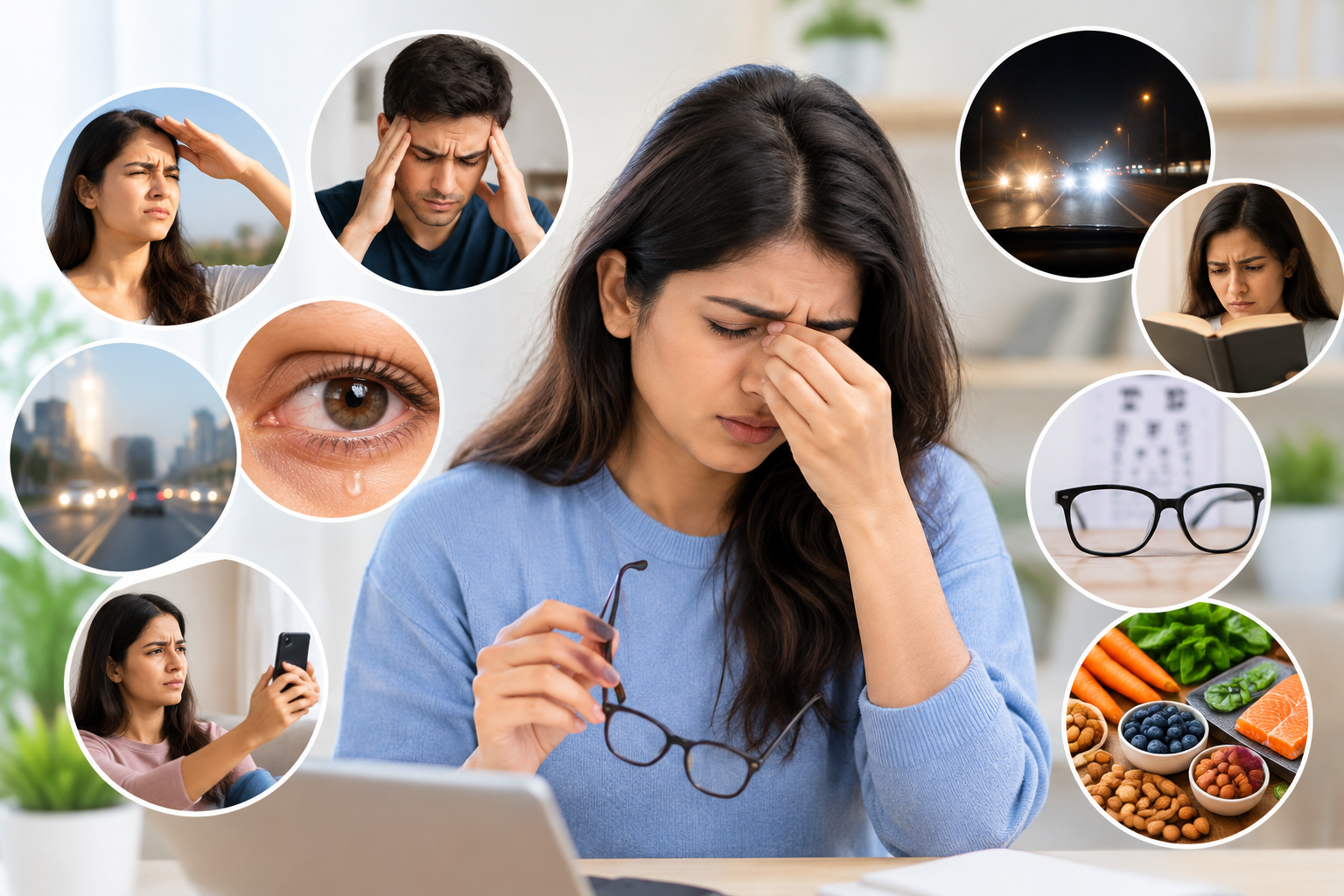
Table of Contents
- 1. Understanding What "Weak Eyesight" Actually Covers
- 2. The Telltale Symptoms of Eye Weakness
- 3. Why Eyesight Weakens in the First Place?
- 4. Red Flags That Go Beyond Ordinary Eye Strain
- 5. Small Habits That Protect Your Vision Long-Term
Let’s explore the symptoms of weak eyesight…
Nobody wakes up one morning with suddenly blurry vision — well, almost nobody. For most people, weak eyesight develops so slowly that it becomes normal before it becomes noticeable. You start sitting closer to the TV, holding your phone a little farther away, or blaming tiredness for that dull ache behind your eyes. These small adjustments are often the first real symptoms of weak eyesight, quietly building up long before anyone books an eye test.
Understanding What "Weak Eyesight" Actually Covers
There's no single condition called "weak eyesight" — it's a catch-all phrase for any drop in visual sharpness, whether that's trouble seeing distant objects, close-up text, or both. Sometimes it's as straightforward as needing glasses for nearsightedness or farsightedness. Other times, it's an early signal of something that needs closer medical monitoring, like the beginnings of a cataract or subtle retinal change. The real value lies in noticing the pattern early, before your daily habits quietly reshape themselves around the problem.
The Telltale Symptoms of Eye Weakness
Watch for these signs or symptoms of eye weakness, which often show up gradually enough to be brushed off:
Spotting one of these occasionally isn't cause for alarm. But when two or three become a regular part of your week, it's a strong enough signal to get your eyes examined.
Read Also This: Eye Health Foods: Best foods, Worst foods, Antioxidants & Eye-healthy Fruits
Why Eyesight Weakens in the First Place?
Knowing the root causes makes both prevention and treatment far more effective:
Read Also This: Can Blurred Vision And What Causes It
Red Flags That Go Beyond Ordinary Eye Strain
Everyday blurriness after a long screen session is common and usually harmless. But certain symptoms call for immediate medical attention rather than a wait-and-watch approach:
None of these should be left to resolve on their own — they need prompt evaluation by an ophthalmologist.
Small Habits That Protect Your Vision Long-Term-
A few consistent habits make a real difference and decrease the symptoms of eye weakness: following the 20-20-20 rule (every 20 minutes, look 20 feet away for 20 seconds), reading and working under adequate lighting, eating a diet that supports eye health, and going for periodic eye exams even when nothing feels wrong — since many eye conditions progress silently long before symptoms appear.
In Summary
Weak eyesight is too often written off as an inevitable side effect of aging or modern screen-heavy living, when in reality, many of its causes are both preventable and manageable if caught in time. The moment squinting, headaches, or blurred vision start feeling routine, that's the moment to get checked — not the moment to adapt further around it.
