
Colour of Eyes in India: Why Brown Eyes Are the Most Prevalent?
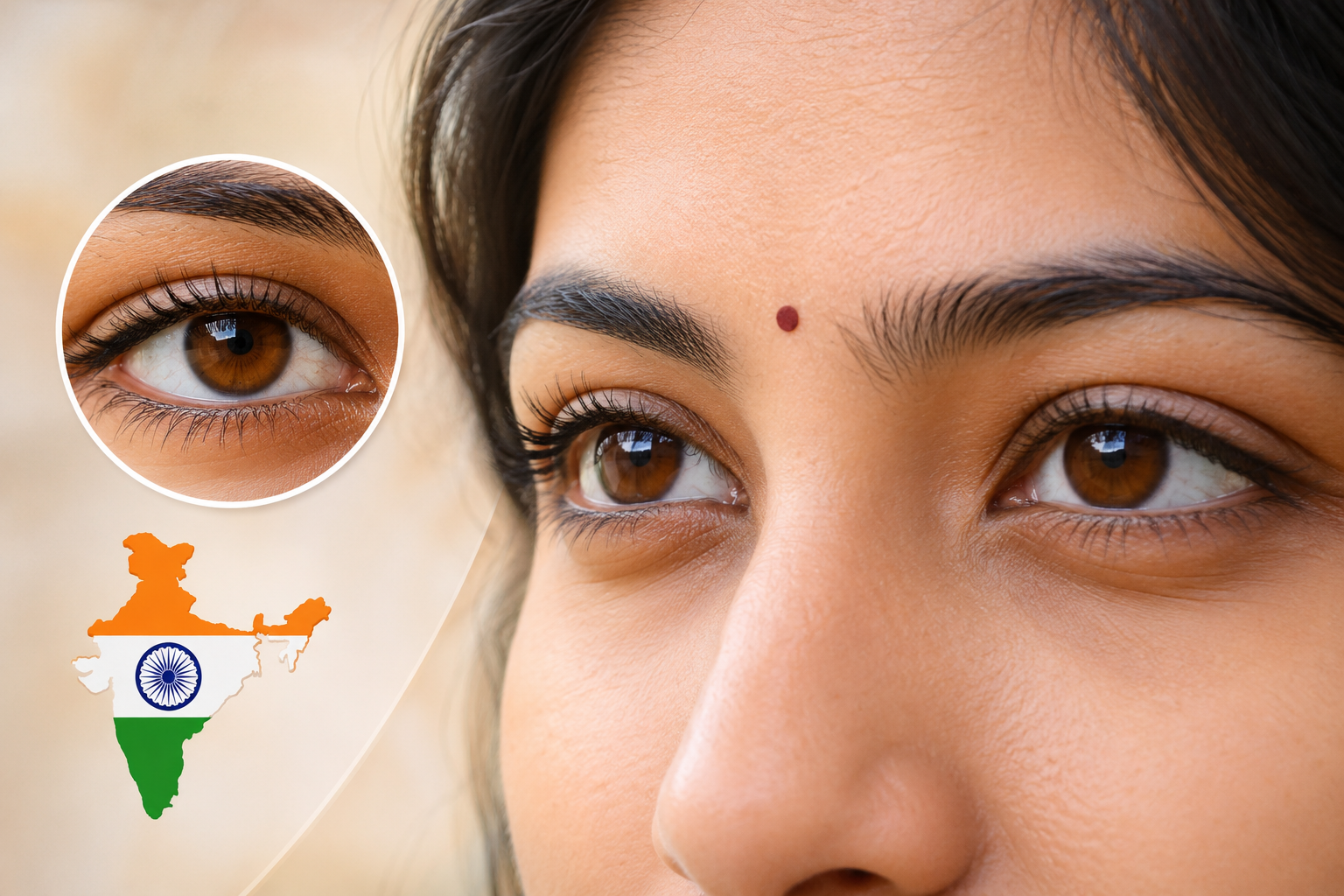
Table of Contents
- 1. What is the most popular eye colour in India?
- 2. Why do Indians have naturally brown eyes?
- 3. Different Shades of Brown Eyes Found in People
- 4. How Much Does Eye Colour Depend on Genetics?
- 5. Can Eye Colour Change With Age?
- 6.Are Brown Eyes Naturally Protective?
- 7. When to See an Ophthalmologist
- 8. Conclusion
Let’s explore the colour of eyes in India…
One of the most fascinating features of the human body is the eyes. They help us to see the world, to express emotions and to identify the people around us. Another interesting thing about the eyes is their natural colour. In India, brown is the most common eye colour, although the shade and look of brown vary from person to person.
Why do some people have really dark eyes and others lighter brown ones? Ever thought about that? The answer lies somewhere in the realms of genetics, melanin, and the biological structure of the iris.
It is interesting to learn about the colour of eyes in India to get an idea of how our appearance is influenced by inherited characteristics.
What is the most popular eye colour in India?
Brown is the dominant eye colour among the Indian population. Most people have dark brown eyes and some are born with medium brown, light brown or hazel coloured irises.
The coloured part of the eye is called the iris. It encircles the pupil and controls the amount of light that enters the eye. The pigmentation of the eye determines the colour we see.
This is mostly related to the quantity and location of melanin in the iris. The more melanin pigmentation, the darker the eyes. Lower pigmentation can help with lighter shades.
Why do Indians have naturally brown eyes?
If you look at the world, most people have brown eyes. If you look at genetics, it’s a pretty common mutation that gets passed down through generations.
Melanin is a natural pigment produced by special cells called melanocytes. It gives colour to skin, hair and eyes.
How the final appearance turns out depends on how much melanin is in the iris and how light interacts with the structure.
This is why two people from the same city can have dramatically different eye colours. Their genetic backgrounds and inherited pigmentation traits may not be the same.
Different Shades of Brown Eyes Found in People
Not all people with brown eyes look the same. Some have very dark irises, others are warmer and lighter in tone.
Now let’s check out some of the common variations in brown eyes.
1. Brown Dark
The Dark Brown eyes are heavily pigmented and are common in India. In photographs or dim environments, their appearance can sometimes look like black.
2. Medium tan
You can clearly see the brown of medium brown eyes, and it may look warmer in natural daylight. Depending on the light around it, the iris can be bright to varying degrees.
3. Light Brown
Light brown eyes look softer in comparison to darker shades. Some people might find that their irises are faintly honey or golden coloured.
4. Hazal
Hazel eyes are characterised by a combination of brown, green and golden shades. The pigmentation pattern results in a mixed colour appearance that can change under different lighting conditions.
Read Also This: LASIK Eye Surgery Cost in India: 2026 Price Guide
How Much Does Eye Colour Depend on Genetics?
Eye colour is inherited from both parents, but the inheritance is more complicated than a simple family resemblance.
Iris pigmentation is controlled by multiple genes. Of these, OCA2 and HERC2 are especially important as they influence melanin production and regulation.
This is why children do not always have the same eye colour as their parents. Due to the genetic differences passed down from each side of the family, two parents with brown eyes can have a child with a lighter shade.
Thus, eye colour cannot be predicted accurately with a simple dominant and recessive law.
Can Eye Colour Change With Age?
Natural pigmentation of the eyes can also occur in infancy and early childhood. However, the permanent colour of the adult iris is usually quite stable.
People sometimes think that their eyes have changed colour, but they just look different due to environmental conditions.
Some of the reasons for these differences are:
Lighting conditions: In bright sunlight, lighter details in the iris may be emphasised.
Pupil size: Changes in pupil size can change the perceived colour of the eyes.
Age: Pigmentation can appear in early childhood.
Medical conditions: Some diseases, injuries and medications can cause actual changes in the appearance of the iris.
A sudden change in the colour of the eye, especially if it is in one eye or is accompanied by discomfort or blurred vision, should not be ignored.
Are Brown Eyes Naturally Protective?
Because it absorbs some of the light coming in, melanin is protective. The darker the iris, the more melanin it tends to contain.
Brown eyes, however, do not offer complete protection against ultraviolet radiation or other eye problems.
When to See an Ophthalmologist
Eye colour is a natural characteristic that is typically inherited. But strange changes in the look of your eyes or trouble with vision could deserve professional evaluation.
If you have continued redness, eye pain, a sudden change in the colour of the iris of the eye, blurred vision or unusual light sensitivity, see an ophthalmologist.
An eye exam helps to know the status of the eyes and to detect potential problems early.
Conclusion
Brown continues to be the most common eye colour in India. Natural variation from deep brown to lighter golden shades is caused by melanin pigmentation and genetic inheritance.
The colour of the eye makes each person visually distinctive, but it does not determine the overall health of their eyes. Routine checkups, good habits and prompt medical care are key to preserving good eyesight.
Dr. Vikas Veerwal is the best eye specialist in Indirapuram, Ghaziabad. Visit for professional eye examinations and vision-related consultations.
