
Blood Clot in Eye: What Causes It and How to Treat It
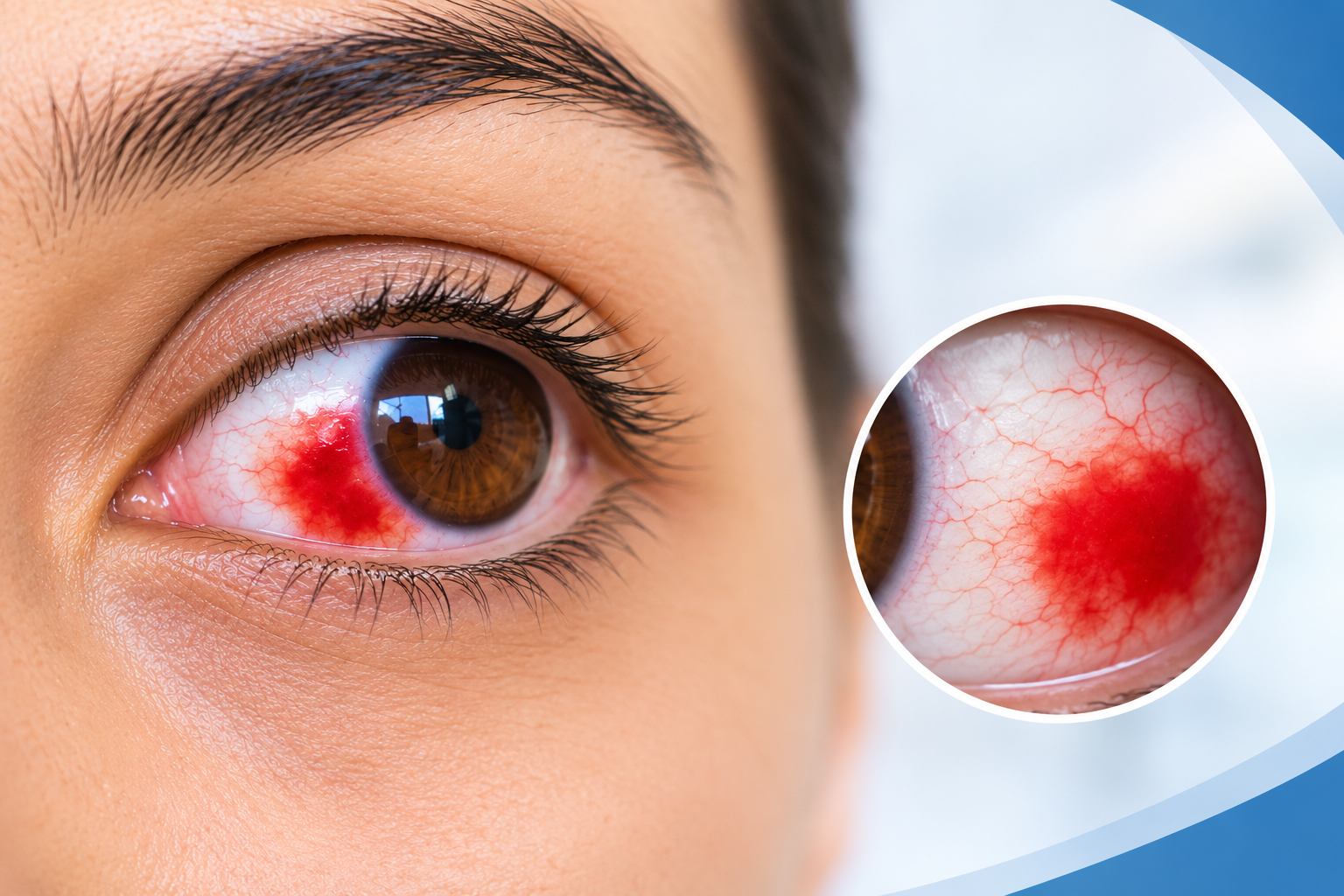
Table of Contents
- 1. The Real Story Behind the Red Patch
- 2. What Actually Triggers a Vessel to Rupture
- 3. Signs That Tell You It's Harmless (And Signs That Don't)
- 4. Accelerating Recovery: What Works
- 5. Speeding Up Recovery: What Actually Helps
- 6. Conclusion-
Let’s explore a blood clot in eye…
You look in the mirror and you see it — a spot of red where there was once only white in your eye. Completely painless, completely clear vision, no other abnormality, and yet the mere act of looking at it can make anyone panic mildly. Blood Clot in Eye or the Fancier, and More Fearful Phrase "Sudden Blood Spot In Eye" — This is probably the second most searched eye concern of all time. It is hardly ever really a clot at all — it's basically a capillary that has ruptured under the surface of the eye and is much less serious than it appears at first sight.
The Real Story Behind the Red Patch
The white outer layer of the eye, called the sclera, is located beneath a clear membrane called the conjunctiva. In between this thin layer are countless blood vessels so small that if stress even occurs they can burst.
Thus, a collection of blood fills the minute space in between the conjunctiva and sclera. Since the conjunctiva is transparent, that pooled blood becomes visible right away — and usually looks much more impressive than the actual amount of blood responsible for it.
Although this condition has a clinical term, subconjunctival hemorrhage, most folks simply name it as "blood clot in eye or blood spot in eye" when they identify it.
Read Also This: Can Blurred Vision And What Causes It
What Actually Triggers a Vessel to Rupture
It isn't always clear what caused them, but the usual suspects are: straining to cough, sneeze, or vomit—this can end up pushing enough internal pressure to pop a brittle vessel; heavy lifting or strenuous activity (which increase blood flow and momentary eye blood pressure); aggressive eye rubbing especially when tired or irritated; anticoagulant medications like aspirin or warfarin (which make vessels more prone to reed out); uncontrolled chronic high blood pressure (lifetime of weakening edge walls); improper handling of contact lenses; and paroxysmal coughing fits for long crying bouts when you get surges.
Many patients do not recognize a discernible trigger — in some cases, a vessel simply ruptures during the night, only elucidated when a bruise is quantified the following morning.
Signs That Tell You It's Harmless (And Signs That Don't)
An uncomplicated broken vessel often presents as a well-defined red or dark area on the white of the eye (sclera), with no more than mild discomfort, perfect vision, and no discharge.
If the red stain is accompanied by pain, light sensitivity, blurred vision or discharge that should be a sign to stop self-diagnosing and be seen. All of these extra symptoms imply something more than just a vessel rupture — perhaps an infection or deeper injury to the eye.
Accelerating Recovery: What Works
Nobody recovers in one night, but in its right context, learning these approaches may help him heal quickly. An ice pack can help limit any leakage that may already be happening, soothe the swelling that occurs immediately after your treatment — and this is just at day one! Use a warm compress from day two and beyond, as warmth increases circulation and helps your body recover that trapped blood more quickly.
No touching the eye — rubbing will make bleeding last longer or be worse. Preservative-free artificial tears are topical drops or gels that relieve mild symptoms without causing more. Limit your alcohol intake for now, as it can thin the blood and impede healing. Monitor your blood pressure because if hypertension isn't controlled, there is a greater risk for recurrence. Top of the list is time — like any bruise, the mark will change colour and gradually disappear, usually over one to two weeks.
Read Also This: Watery Eyes: Causes, Treatment, and Home Remedies
Speeding Up Recovery: What Actually Helps
Schedule an appointment with an eye doctor if: the same eye keeps bleeding over and over; the redness occurs along with pain or vision changes; the spot occurred immediately after you hurt your eye; you're taking blood-thinning medicine, and it looks like there is a big hemorrhage following this therapy, or two weeks pass without any visible improvement.
So-called recurrent episodes are particularly worth a careful examination — sometimes they can indicate a clotting or vascular disorder lurking under the radar, rather than an isolated fluke.
Conclusion-
A blood clot in eye looks more alarming than it is almost always, but what you might see in the mirror does not transparently communicate how far away from "no biggie and should resolve on its own" versus "needs medical intervention." When the broken vessel does not fade as planned or the return is persistent, a professional assessment alleviates speculation.
